
DIY Face Packs for Every Skin Type: Natural Recipes for Healthy, Glowing Skin
Healthy skin doesn’t always require expensive products. Sometimes, the best skincare routine starts with simple, natural ingredients that have been trusted for generations. Whether your skin is oily, dry, sensitive, combination, or normal, choosing the right face pack can help cleanse, nourish, and refresh your skin naturally.
In this guide, we’ll share easy DIY face packs for every skin type, explain how to use them correctly, and highlight common mistakes to avoid. If you enjoy natural skincare, these recipes can become a great addition to your weekly routine.
Quick Answer: The best DIY face pack depends on your skin type. Oily skin benefits from clay-based ingredients like Multani Mitti and Neem, while dry skin needs moisturizing ingredients such as Rose Petals and Aloe Vera. Combination skin requires balancing ingredients, and sensitive skin should use gentle, fragrance-free options.
How to Identify Your Skin Type
Oily Skin
- Excess oil throughout the day
- Enlarged pores
- Frequent acne or blackheads
Dry Skin
- Tight feeling after washing
- Flaky or rough texture
- Dull appearance
Combination Skin
- Oily T-zone
- Dry or normal cheeks
Sensitive Skin
- Easily irritated
- Redness or itching
- Reacts quickly to new products
Normal Skin
- Balanced oil production
- Smooth texture
- Minimal skin concerns
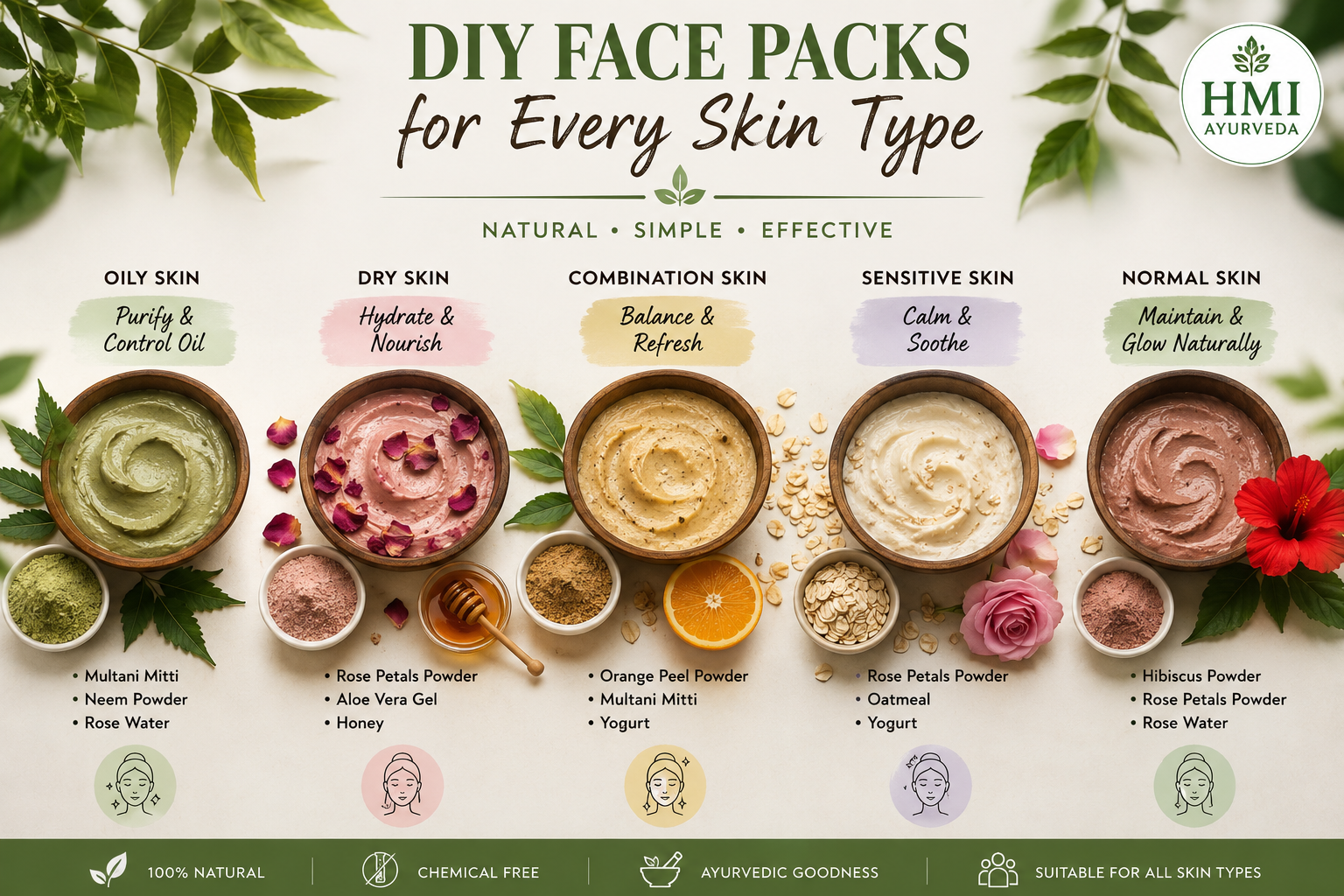
DIY Face Pack for Oily Skin
Ingredients
- 1 tablespoon Multani Mitti
- 1 teaspoon Neem Powder
- Rose Water (as needed)
Mix everything into a smooth paste and apply for 10–15 minutes. Wash with cool water.
Why It Works: Multani Mitti helps remove excess oil and impurities, while Neem is traditionally used in skincare for maintaining clean, healthy-looking skin.
Internal Linking Opportunity: Neem Powder and Multani Mitti & Henna Powder.
DIY Face Pack for Dry Skin
- 1 tablespoon Rose Petals Powder
- Fresh Aloe Vera Gel
- 1 teaspoon Honey
Apply for 15 minutes before rinsing with lukewarm water.
DIY Face Pack for Combination Skin
- 1 teaspoon Orange Peel Powder
- 1 teaspoon Multani Mitti
- Yogurt
Apply mainly to oily areas while using a thinner layer on dry areas.
DIY Face Pack for Sensitive Skin
- Rose Petals Powder
- Oatmeal
- Plain Yogurt
Always perform a patch test before using any homemade face pack.
DIY Face Pack for Normal Skin
- Hibiscus Powder
- Rose Petals Powder
- Rose Water
Use once every week for a refreshing skincare routine.
Common DIY Face Pack Mistakes to Avoid
- Don’t leave face packs on for more than 20 minutes.
- Avoid using lemon directly on sensitive skin.
- Don’t scrub aggressively while removing the pack.
- Always moisturize after washing.
- Use fresh ingredients whenever possible.
- Patch test before trying a new ingredient.
How Often Should You Use a DIY Face Pack?
| Skin Type | Recommended Frequency |
|---|---|
| Oily Skin | 2–3 times weekly |
| Dry Skin | 1–2 times weekly |
| Combination Skin | 2 times weekly |
| Sensitive Skin | Once weekly |
| Normal Skin | 1–2 times weekly |
Frequently Asked Questions
Which DIY face pack is best for glowing skin?
A combination of Rose Petals Powder and Hibiscus Powder with rose water is a popular natural option.
Can I use a face pack every day?
No. Most homemade face packs work best one to three times per week.
Is Multani Mitti suitable for dry skin?
Use it with moisturizing ingredients like aloe vera or yogurt.
Should I apply moisturizer after a face pack?
Yes. Moisturizing helps support the skin barrier.
Can natural face packs remove acne overnight?
No. Consistent skincare gives the best long-term results.
Build a Healthy Skincare Routine Naturally
DIY face packs are a simple way to care for your skin using natural ingredients. The key is choosing recipes that suit your skin type. Along with regular cleansing, moisturizing, sun protection, and a balanced diet, homemade face packs can become a valuable part of your skincare routine.
Looking for premium-quality herbal powders for your DIY skincare routine? Explore HMI Ayurveda’s range of naturally sourced herbal products to support healthy, glowing skin.


 by
by 



Add comment