
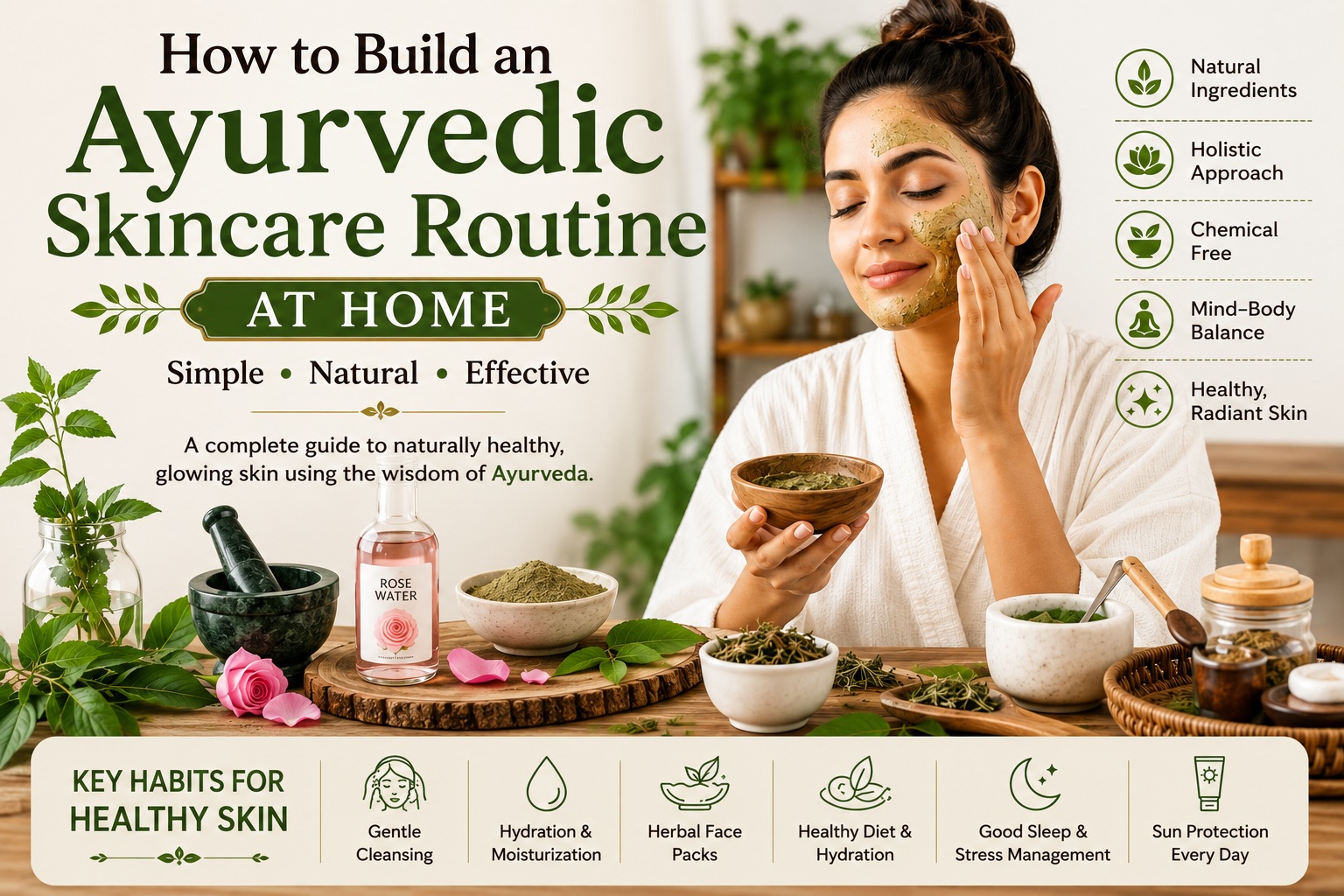
How to Build an Ayurvedic Skincare Routine at Home
Modern skincare offers countless products promising instant glow, younger-looking skin, and quick solutions for common concerns. Yet many people still struggle with dryness, acne, sensitivity, or uneven skin tone despite following elaborate routines.
Ayurveda takes a different approach.
Instead of focusing only on the skin’s surface, Ayurveda views healthy skin as a reflection of overall well-being. Factors such as digestion, sleep, stress, seasonal changes, and daily lifestyle all contribute to the way your skin looks and feels.
An Ayurvedic skincare routine is therefore not about using dozens of products. It is about building simple, consistent habits that nourish the skin naturally while supporting your body’s internal balance.
Whether you have oily, dry, combination, or sensitive skin, a personalized Ayurvedic routine can help you maintain healthy-looking skin using trusted herbs, gentle cleansing methods, and mindful self-care practices.
Why Choose Ayurveda for Skincare?
Ayurveda is one of the world’s oldest holistic wellness systems, developed through centuries of observation and traditional knowledge. Rather than treating skincare as an isolated concern, Ayurveda considers the connection between the skin, digestion, lifestyle, environment, and overall health.
This holistic philosophy encourages long-term skin wellness instead of relying on temporary cosmetic fixes.
Some of the reasons people choose Ayurvedic skincare include:
- Gentle plant-based ingredients
- Simple daily routines
- Focus on prevention
- Personalized care based on individual needs
- Long-term skin maintenance
Many Ayurvedic herbs have traditionally been used in skincare practices because they are known for their cleansing, soothing, and nourishing properties.
Examples include:
- Neem
- Turmeric
- Aloe Vera
- Rose
- Sandalwood
- Manjistha
- Licorice (Mulethi)
These herbs are often used in homemade face packs, herbal cleansers, facial steams, and masks.
Understanding Your Skin Through Ayurveda
Before choosing any skincare routine, Ayurveda recommends understanding your body’s natural constitution.
While traditional Ayurvedic diagnosis is more detailed and should be performed by a qualified practitioner, the three doshas provide a useful framework for understanding general skin tendencies.
Vata Skin
Typical characteristics:
- Dry
- Thin
- Rough texture
- Easily dehydrated
- Fine lines appear early
People with Vata-dominant skin usually benefit from nourishing oils, hydration, and gentle cleansing.
Pitta Skin
Typical characteristics:
- Sensitive
- Warm
- Redness-prone
- Acne-prone
- Easily irritated by heat
Cooling herbs and calming skincare routines are generally preferred for Pitta skin.
Kapha Skin
Typical characteristics:
- Oily
- Thick
- Larger pores
- Congestion
- Blackheads
Kapha skin often benefits from regular cleansing, gentle exfoliation, and lightweight herbal formulations.
Understanding these tendencies helps create a skincare routine that works with your skin instead of against it.
Step 1: Start with Gentle Cleansing
Healthy skin begins with proper cleansing.
Throughout the day, your skin collects sweat, environmental pollutants, excess oil, sunscreen, and makeup. Removing these impurities without stripping the skin’s natural moisture barrier is essential.
Instead of harsh cleansers containing strong detergents, many people prefer gentle herbal alternatives inspired by Ayurveda.
Ingredients commonly used include:
- Rose water
- Aloe vera
- Gram flour (Besan)
- Oat flour
- Raw milk (where suitable)
- Herbal powders
Choose a cleanser that suits your skin type.
For oily skin, lightweight herbal cleansing works well.
For dry skin, cream-based or milk-based cleansing may be more comfortable.
For sensitive skin, fragrance-free products and minimal ingredients are generally preferred.
Avoid over-cleansing. Washing your face twice daily is sufficient for most people.
Step 2: Use Herbal Ingredients That Support Healthy Skin
Ayurveda uses a wide variety of botanical ingredients in skincare.
Below are some of the most commonly used herbs.
Neem
Neem has long been valued in traditional skincare for its cleansing properties. It is commonly included in herbal face packs for oily and acne-prone skin.
If you’re looking for a natural herbal ingredient, you can explore Organic Neem Leaf Powder from HMI Ayurveda. It can be mixed with rose water, aloe vera gel, or multani mitti to prepare a simple homemade face pack.
Aloe Vera
Aloe vera is widely used for its soothing and hydrating qualities.
Fresh aloe vera gel can be applied after cleansing to help refresh the skin.
Turmeric
Turmeric is one of Ayurveda’s best-known herbs.
Traditionally, it has been used in face packs to promote healthy-looking skin and improve the appearance of dullness.
Only a small quantity is generally needed because turmeric can temporarily stain the skin.
Rose
Rose water remains one of the simplest natural facial toners.
It helps refresh the skin after cleansing and works well for most skin types.
Sandalwood
Sandalwood has traditionally been used in cooling face packs, especially during warmer months.
Its calming fragrance also makes it a popular ingredient in Ayurvedic self-care rituals.
Step 3: Hydrate Your Skin Naturally
Hydration is often misunderstood.
Applying moisturizer alone is not enough.
Healthy-looking skin also depends on:
- Drinking adequate water
- Eating seasonal fruits
- Including healthy fats in the diet
- Managing stress
- Getting sufficient sleep
A lightweight moisturizer should be selected according to your skin type.
Those with dry skin may prefer richer formulations, while oily skin usually benefits from gel-based or lightweight moisturizers.
Ayurveda also encourages seasonal adjustments rather than using the same skincare products year-round.
A Simple Morning Ayurvedic Skincare Routine
You don’t need ten different products to care for your skin.
A balanced morning routine can be completed in just a few steps.
- Cleanse your face gently.
- Apply rose water or a mild herbal toner.
- Use a lightweight moisturizer suitable for your skin type.
- Finish with a broad-spectrum sunscreen before going outdoors.
Consistency is far more important than using multiple products occasionally.
Step 4: Follow a Gentle Evening Skincare Routine
Your skin works hard throughout the day, facing pollution, dust, UV exposure, sweat, and environmental stressors. A consistent nighttime routine helps remove impurities and prepares your skin for its natural overnight renewal process.
A simple Ayurvedic-inspired evening routine may include:
1. Cleanse Thoroughly
Wash your face with a gentle herbal cleanser to remove dirt, sunscreen, and excess oil. Avoid scrubbing aggressively, as this can irritate the skin.
2. Apply a Herbal Toner
Rose water is a popular choice because it refreshes the skin and helps maintain a balanced feel after cleansing.
3. Moisturize
Nighttime is an ideal time to replenish moisture. Choose a moisturizer suitable for your skin type.
4. Weekly Herbal Face Pack
Two or three times a week, include a homemade herbal face pack to support healthy-looking skin.
DIY Ayurvedic Face Packs You Can Make at Home
One of Ayurveda’s biggest advantages is its use of simple, natural ingredients that are easy to include in your weekly skincare routine.
Face Pack for Oily Skin
Ingredients:
- 1 teaspoon Organic Neem Leaf Powder
- 1 teaspoon Multani Mitti
- Rose Water
Mix into a smooth paste and apply for 10–15 minutes before rinsing with normal water.
Neem has traditionally been valued for cleansing oily skin, while Multani Mitti helps absorb excess oil.
Face Pack for Dry Skin
Ingredients:
- Aloe Vera Gel
- Honey
- Sandalwood Powder
This combination provides hydration while leaving the skin feeling soft and refreshed.
Face Pack for Dull Skin
Ingredients:
- Gram Flour (Besan)
- A pinch of Turmeric
- Rose Water
This traditional home remedy has been used for generations as part of regular skincare routines.
Healthy Skin Begins from Within
Ayurveda believes that external skincare works best when supported by healthy daily habits.
While face packs and cleansers care for the outer layer of the skin, overall wellness plays an equally important role in maintaining a healthy complexion.
Some simple habits include:
- Drink enough water throughout the day.
- Include seasonal fruits and vegetables in your meals.
- Sleep for 7–8 hours whenever possible.
- Stay physically active.
- Manage everyday stress through yoga, meditation, or breathing exercises.
These lifestyle choices contribute to overall wellness, which is often reflected in the appearance of your skin.
Can Herbs Support Overall Skin Wellness?
Ayurveda often takes a holistic approach by supporting internal wellness alongside external skincare.
Certain herbs have traditionally been included as part of a balanced wellness routine.
Ashwagandha
Stress can sometimes affect the appearance of the skin. Ashwagandha is a well-known Ayurvedic herb traditionally used to support overall well-being and help the body adapt to everyday stress.
When combined with a healthy lifestyle, adequate sleep, and a balanced diet, it may complement an overall wellness routine.
If you’re looking for a premium herbal option, you can explore Ashwagandha Powder from HMI Ayurveda.
Jamun Seed Powder
Healthy skin is often associated with overall metabolic wellness and balanced nutrition.
Jamun Seed Powder has traditionally been included in Ayurvedic wellness practices as part of a healthy lifestyle.
Although it is not a topical skincare ingredient, maintaining overall health is an important aspect of Ayurvedic living.
If you’d like to learn more, you can explore Jamun Seed Powder from HMI Ayurveda.
Bhringraj Powder
Bhringraj is best known for supporting healthy hair and scalp care.
If you’re following a complete Ayurvedic self-care routine, healthy hair care often complements healthy skincare.
You may explore Bhringraj Powder as part of your overall herbal wellness routine.
Foods That Naturally Support Healthy Skin
Although no single food can guarantee flawless skin, a nutrient-rich diet supports overall skin health.
Consider including:
- Fresh seasonal fruits
- Leafy green vegetables
- Nuts and seeds
- Whole grains
- Fresh coconut water
- Amla
- Pumpkin Seeds
- Flax Seeds
Limiting highly processed foods and sugary beverages may also help support overall wellness.
Daily Habits That Can Affect Your Skin
Sometimes skincare products aren’t the problem.
Daily habits often make a noticeable difference.
Try to avoid:
- Sleeping with makeup on
- Touching your face frequently
- Using very hot water
- Over-exfoliating
- Frequently changing skincare products
- Skipping sunscreen during the day
- Ignoring hydration
Consistency is usually more effective than constantly trying new products.
Seasonal Ayurvedic Skincare Tips
Summer
- Stay hydrated.
- Choose lightweight skincare products.
- Use cooling ingredients like rose water and aloe vera.
Monsoon
- Cleanse regularly to remove excess oil.
- Avoid heavy creams if your skin feels greasy.
- Keep towels and makeup brushes clean.
Winter
- Use richer moisturizers.
- Avoid very hot showers.
- Increase hydration through water and nourishing foods.
Common Mistakes to Avoid
Many people unknowingly damage their skin barrier by following too many skincare trends.
Common mistakes include:
- Using harsh scrubs every day
- Applying too many active ingredients together
- Ignoring patch testing
- Following social media skincare hacks without understanding your skin type
- Expecting overnight results
Healthy skin develops through regular care rather than instant solutions.
Frequently Asked Questions
Is Ayurvedic skincare suitable for all skin types?
Ayurvedic skincare can often be adapted to different skin types by choosing ingredients that suit individual needs. If you have persistent skin concerns, consult a qualified healthcare professional or dermatologist.
How long does it take to see results?
Everyone’s skin is different. Consistency, healthy habits, and choosing products suitable for your skin type are important factors.
Can I use Neem Powder every day?
Most people prefer using herbal face packs containing Neem Powder one or two times a week rather than daily. Frequency depends on individual skin needs.
Is homemade skincare always safe?
Natural ingredients can still cause irritation in some individuals. Always perform a patch test before applying any new ingredient to your face.
Final Thoughts
Building an Ayurvedic skincare routine at home doesn’t require expensive treatments or complicated beauty rituals.
Simple habits such as gentle cleansing, regular moisturizing, balanced nutrition, proper sleep, stress management, and thoughtfully chosen herbal ingredients can all contribute to healthier-looking skin over time.
Instead of chasing quick fixes, focus on creating a routine that you can realistically maintain every day.
When selecting herbal products, choose trusted, high-quality ingredients from reliable sources.
Looking to build a natural wellness routine? Explore HMI Ayurveda’s range of carefully selected herbal powders and wellness products, prepared to support your everyday lifestyle. Whether you’re searching for Neem Leaf, Ashwagandha, Bhringraj, or Jamun Seed Powder, choose products that prioritize quality, purity, and traditional Ayurvedic principles.
Remember, healthy skin is not about perfection. It is about consistent care, healthy habits, and supporting your body from the inside out.






 by
by 



Add comment